
Effects
The Effects tab is a network-panel style list of every effect call, and a place to control what effects do.
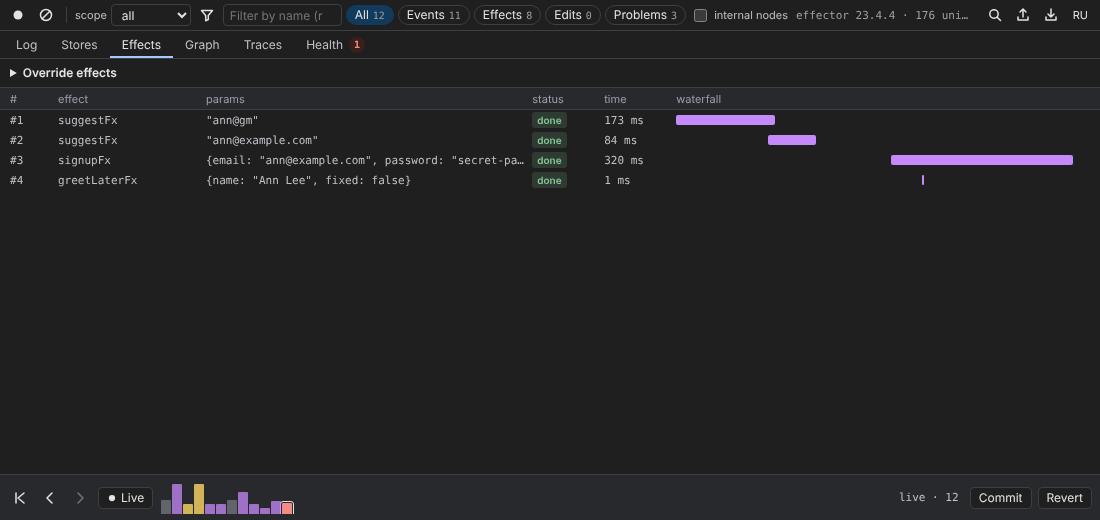
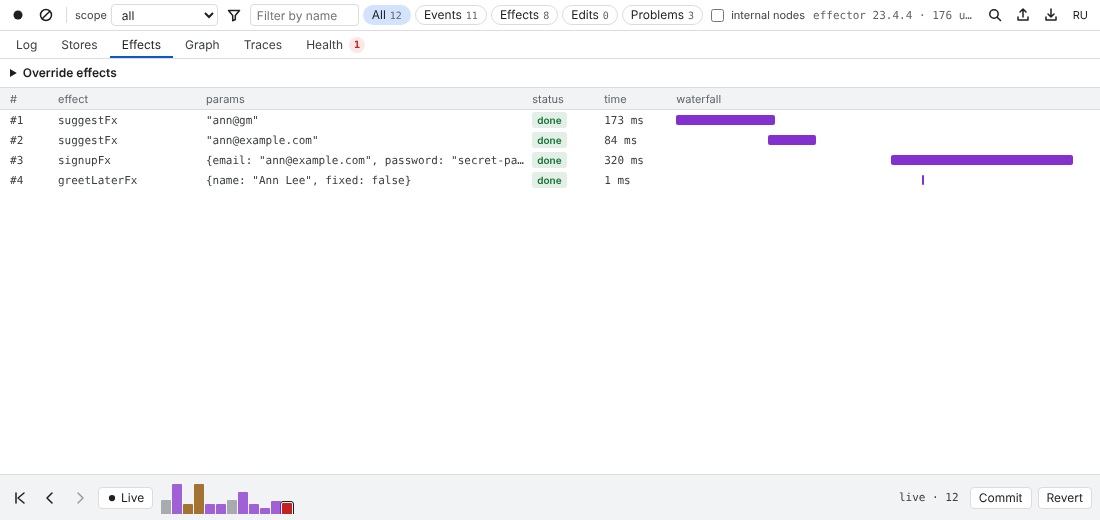
The waterfall
One row per call: the call number, the effect, its params, the status (pending, done, fail), how long it took, and a bar on a shared time axis. Pending calls grow live.
A call that finished after a later call of the same effect is highlighted — “finished after a later call”. That is the classic race: a slow response for an old query overwrites the result of a newer one. In the demo, type fast in the email field and watch suggestFx.
Hover a row to see who called it (“called by #3”) and the result; click it to open the transaction in the Log (the one where it settled, if it has).
Override effects
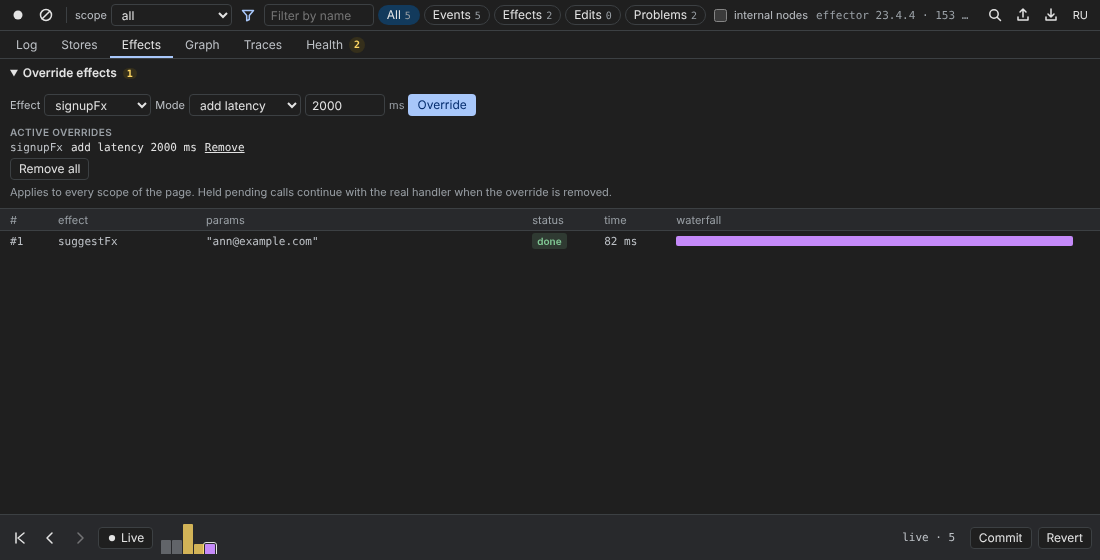
Expand Override effects to change what an effect does, without touching the code:
| Mode | What happens |
|---|---|
| keep pending | calls never settle — test your spinners and disabled buttons |
| resolve with | calls resolve with the JSON value you type |
| reject with | calls reject with the value (plain text is fine for an error message) |
| add latency | calls wait the given number of ms, then run the real handler |
| own handler | your function: async (params) => …, where original(params) calls the real handler |
Pick the effect and the mode, fill the value and press Override. Active overrides are listed with Remove next to each and Remove all; overridden effects get an overridden badge in the waterfall, and the section header shows how many are active.
How it works: the override replaces the effect's default handler (used by every scope and by the global graph) and, for effects with a sid, the handler in every known scope — a handler set with fork({ handlers }) would otherwise win. It “applies to every scope of the page”. Calls held by keep pending continue with the real handler when the override is removed.
Own handler and CSP
The own handler code is compiled in the page with new Function. A page whose Content Security Policy forbids unsafe-eval will refuse it; the other modes work everywhere.
Overrides are not recorded into traces as such — a trace keeps the results the effects produced, and replay uses those results anyway.